

Forest School is, by nature, a full-body sensory environment. Bark, mud, wind, fire and uneven ground create a rich sensory experience. The question for practitioners isn’t what sensory activity can I provide today? but what sensory information is already here, and how can I help a child notice and respond to it?
This shift in our own mindset as practitioners is grounded in how sensory processing actually works.
Where the theory comes from
Modern sensory-integration thinking traces back to A. Jean Ayres (1972), an occupational therapist and neuropsychologist who spent her career researching and developing the sensory integration theory and intervention strategies – to understand and treat children with learning and behavioural challenges (Lane et al., 2019). Ayres relied heavily on neuroscience literature to guide her understanding of previously unexamined sensory and motor deficits affecting learning and behaviour (Lane et al., 2019). Working through the late 1960s and 70s, Ayres (1972b) defined sensory integration as the neurological process that organises sensation from the body and the environment so it can be used effectively. Ayres (1972b) proposed that when this organising process doesn’t develop smoothly, it can show up as difficulties with learning, coordination, behaviour, and emotional regulation. Her 1972 study on children with learning disorders was an early controlled trial of the approach (Ayres, 1972a), and her framework (now trademarked as Ayres Sensory Integration®) remains the foundation most occupational therapy sensory work builds on today, including the proprioceptive, vestibular, and tactile categories used throughout this article.
Two later strands of research have built on that foundation in ways directly relevant to Forest School:
- Interoception and self-regulation. Occupational therapist Kelly Mahler’s Interoception Curriculum treats interoceptive awareness as trainable, not fixed — and small studies using it, including a 25-week school-based programme with autistic pupils (Mahler et al., 2022) and a feasibility trial in a special-education classroom (Mahler et al., 2024), found measurable improvements in both interoceptive awareness and emotional regulation after structured practice noticing body signals. This supports the idea that repeatedly asking “what is your body telling you?” isn’t just a nice question – it’s a rehearsable skill!
- Natural environments and motor development. Norwegian researcher Ingunn Fjørtoft’s landscape-ecology studies (Fjørtoft, 2001, 2004) compared children playing in natural, varied terrain against children on standard playgrounds over a nine-month period. The natural environment group showed statistically significant gains in motor fitness, including balance and coordination, with functional play, (climbing, running, uneven ground navigation) the dominant activity type (Fjørtoft, 2004). This provides supportive evidence for the proprioceptive and vestibular claims made earlier: varied, natural terrain isn’t just enjoyable, it measurably builds the physical skills those systems rely on.
The science summed up;
Sensory processing isn’t just about receiving input. It’s about how the nervous system detects, filters, and interprets it. Alongside the five familiar senses (hearing, sight, smell, taste and touch) three systems matter most outdoors:
- Proprioception — receptors in muscles and joints that signal body position, force, and effort (climbing, carrying, digging).
- Vestibular sense — the inner ear’s balance system, activated by tilting, spinning, and changes in head position (balancing on logs, rolling, swinging).
- Interoception — the sense of the body’s internal state: heart rate, breathing, temperature, hunger, thirst, and bladder or bowel fullness. Interoceptive awareness is increasingly linked in the research literature to emotional regulation, since noticing a bodily signal is a precondition for responding to it appropriately (Mahler et al., 2022).
Children vary widely in how they register and tolerate this input– some seek intense movement, others find the same input overwhelming. Neither response is a behaviour problem to correct; it is an individual’s sensory processing at work. The practitioner’s role is to widen the choice of input available, not to standardise the experience.
Turning existing moments into interoceptive practice, basically, turning everyday moments into body awareness practice.
Rather than adding activities, reframe the ones already happening within the setting/session:
After climbing or carrying: “What is your body telling you? Is your heart beating faster? Is your breathing different?”
During a woodland walk: “Do your legs feel tired? Are you warm or cold? Does your body need a drink?”
By the fire: “Can you feel the difference between your warm side and your cool side?”
At a quiet sit spot: “Is your breathing fast or slow right now? Does your body feel still or busy?”
These questions cost nothing extra to include, and they build a vocabulary for internal states that many children don’t develop automatically. Body awareness language has to be modelled and practised, much like emotional vocabulary does.
Modelling: body doubling in action
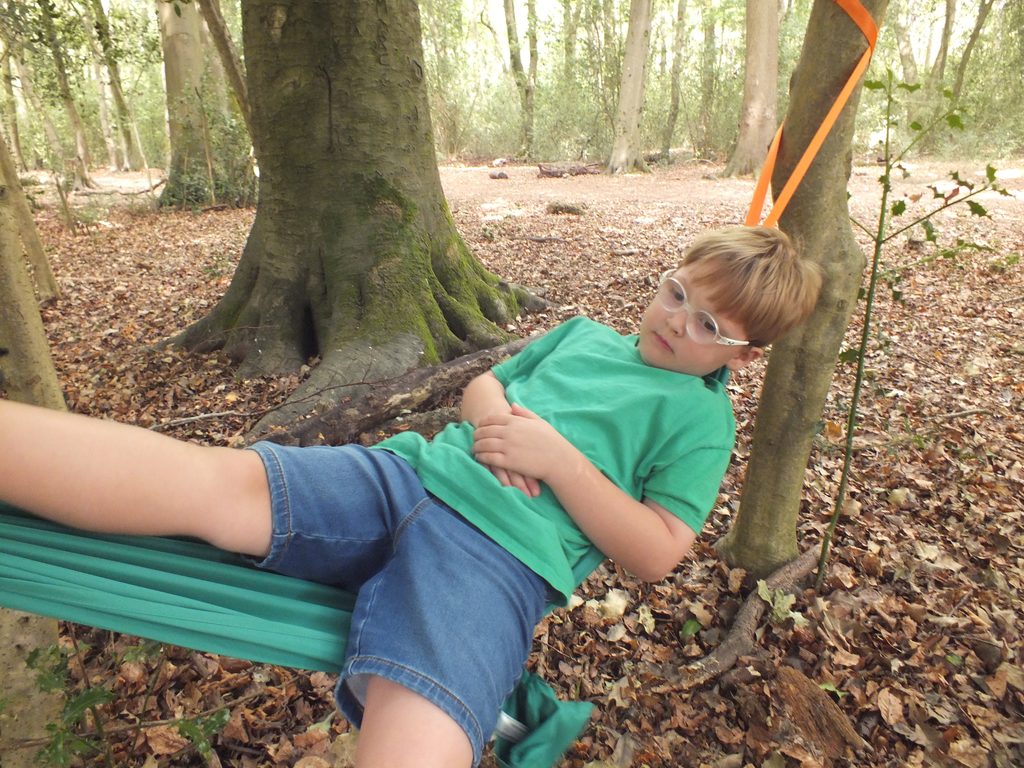
Children often don’t register thirst until they’re already dehydrated, and can be too absorbed in play to notice bladder or bowel signals. One evidence-based approach is body doubling. Practitioners narrating their own internal signals aloud:
“My mouth feels dry — I think my body’s telling me I’m thirsty.” [drinks] “That’s better.”
This models the sequence, signal → interpretation → action, which children then begin applying to themselves, remembering practice is progress not perfection. It works better as an ongoing habit throughout a session than as scheduled “drink time,” since interoceptive signals don’t arrive on a schedule.
Why hydration and toileting belong in this conversation…this sh*t matters!
This section draws on guidance from ERIC (Education and Resources for Improving Childhood Continence), the UK’s leading charity for children’s bowel and bladder health, which trains health and education professionals on this topic (ERIC, n.d.-a; Fuidge, 2022):
- Childhood continence problems are common: ERIC cites around 1 in 12 children are affected by a bowel or bladder difficulties roughly three children in an average primary school class (Fuidge, 2022).
- Functional constipation (with no underlying medical cause) affects an estimated 1 in 3 children, and is particularly common under age five (Koppen et al., 2015, as cited in Fuidge, 2022). Stool or bladder withholding – often driven by discomfort, unfamiliar toilets, or being too absorbed in play to notice the urge in time- is a recognised contributing factor, and ERIC’s own guidance notes that withholding and constipation tend to feed each other in a cycle (Fuidge, 2022).
- ERIC’s “Wee Checker” tool uses urine colour as a simple hydration marker: pale, straw-coloured urine (its lightest 1–3 shades) indicates good hydration, while darker urine later in the day is a sign to drink more (ERIC, n.d.-b).
- ERIC specifically advises against restricting or delaying toilet access, since this can worsen withholding (Fuidge, 2022). Practical planning, known toilet locations, no unnecessary waiting, a shame-free culture around asking – supports this guidance directly.
The Forest School framing is ours; the continence-specific facts and recommendations above are ERIC’s, not a general “good practice” gloss.
How bowel and bladder issues can affect behaviour and engagement…This Sh*t Matters!
Continence difficulties don’t stay confined to the toilet, they show up in the woods too, often disguised as something else entirely.
- Discomfort affects mood
Constipation and abdominal discomfort are consistently linked in clinical reports to irritability, low frustration tolerance, temper flare-ups, and disrupted sleep. A child who seems unusually snappy or tearful during a session may be physically uncomfortable, not simply having a difficult day. - Withholding takes real effort
Actively holding in a wee or poo is physically and mentally demanding. ERIC describes children becoming “vacant,” seeming unreachable, or not responding to instructions while withholding, it can look like inattention or defiance, but it may be the child using most of their concentration just to hold on (ERIC, n.d.-c). - Watch for physical signs, not just mood
Sudden stillness mid-play, grimacing, straining, tiptoeing, leg-crossing, or an unusual rigid or “banana-bend” posture are classic withholding signs (ERIC, n.d.-c) — easy to miss outdoors amid normal rough-and-tumble play, but worth a quiet check-in rather than a redirection back to the activity. - Unfamiliar toilets increase avoidance
Forest School toilet arrangements, composting loos, portable toilets, or “find a tree” systems are often less familiar than a child’s toilet at home or school. Discomfort or embarrassment about these can lead a child to withhold rather than ask, which worsens the underlying constipation rather than resolving it (Boorman & Fleming, 2022). - Anticipatory anxiety can look like reluctance
For children with ongoing continence difficulties, worry about needing the toilet in an unfamiliar outdoor setting can itself cause withdrawal from activities, reluctance to join in, or a preference to stay close to the toilet area — separate from, and sometimes mistaken for, general disengagement (Boorman & Fleming, 2022).
The practical takeaway:
A child who suddenly seems withdrawn, irritable, or “not themselves” is worth a calm, low-pressure toilet check-in before assuming the behaviour is about the activity itself, the same “what is your body telling you?” instinct used elsewhere in this article applies here too.
Practical design, not more equipment
A sensory-inclusive woodland is mostly about choice, not additional resources:
| Category | Examples |
| High movement | Climbing, running, jumping, balancing |
| Heavy work (proprioceptive) | Carrying, digging, pulling, den building |
| Tactile | Mud, water, leaves, natural materials |
| Quiet/low-arousal | Sit spots, listening games, observation |
| Interoceptive check-ins | Noticing breath, temperature, thirst, tiredness |
Letting children move between these and opt out of ones that overwhelm them, supports regulation better than a single fixed activity ever could.
What this doesn’t mean
Sensory-informed practice isn’t about eliminating discomfort. Cold rain, rough bark, and scary heights are part of the value of Forest School; the goal is supported exposure, not forced exposure. “I don’t like that” is useful information, not a problem to override. Sometimes the right response is simply: “That’s okay you don’t have to.“
The bottom line
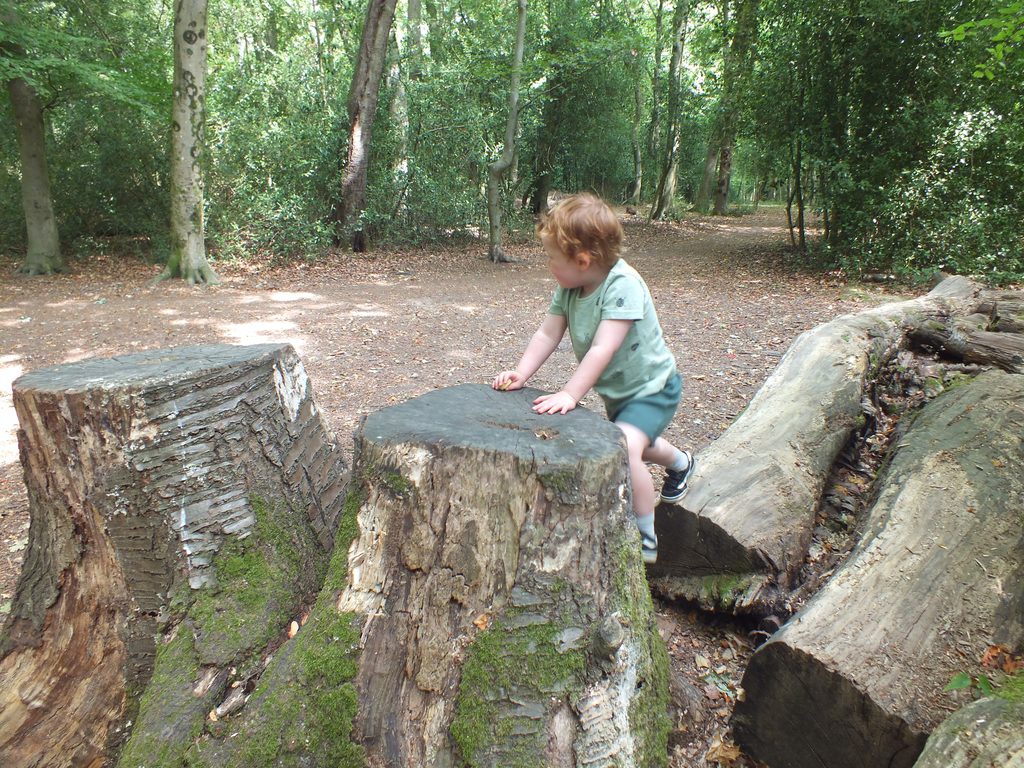
Forest School doesn’t need to change to become more sensory-informed practitioners, just need to narrate what’s already there. A log becomes a proprioceptive task. A fire becomes a temperature-awareness moment. A woodland walk becomes a chance to notice thirst before it becomes dehydration. Over time, “you need a drink” becomes “I know what my body needs” which is the actual goal: independent, self-regulating body awareness, built one ordinary outdoor moment at a time.
This article is a practical reflection for Forest School practitioners, not a substitute for individual occupational therapy or specialist sensory assessment. Children’s sensory needs vary and should be supported individually.
References
Ayres, A. J. (1972a). Improving academic scores through sensory integration. American Journal of Occupational Therapy, 26(1), 13–18. Cited in Mailloux, Z., & Miller-Kuhaneck, H. (2014). Evolution of a theory: How measurement has shaped Ayres Sensory Integration®. American Journal of Occupational Therapy, 68(5), 495–499. https://research.aota.org/ajot/article/68/5/495/8484/Evolution-of-a-Theory-How-Measurement-Has-Shaped
Ayres, A. J. (1972b). Sensory integration and learning disorders. Western Psychological Services. Definition cited in Lane, S. J., Mailloux, Z., Schoen, S., Bundy, A., May-Benson, T. A., Parham, L. D., Smith Roley, S., & Schaaf, R. C. (2019). Neural foundations of Ayres Sensory Integration®. Brain Sciences, 9(7), 153. https://pmc.ncbi.nlm.nih.gov/articles/PMC6680650/
Ayres, A. J. (1979). Sensory integration and the child. Western Psychological Services.
ERIC, The Children’s Bowel & Bladder Charity. (n.d.-a). Home. Retrieved August 2026, from https://eric.org.uk/
ERIC, The Children’s Bowel & Bladder Charity. (n.d.-b). Wee checker. Retrieved August 2026, from https://eric.org.uk/wee-checker/
Fjørtoft, I. (2001). The natural environment as a playground for children: The impact of outdoor play activities in pre-primary school children. Early Childhood Education Journal, 29(2), 111–117. https://link.springer.com/article/10.1023/A:1012576913074
Fjørtoft, I. (2004). Landscape as playscape: The effects of natural environments on children’s play and motor development. Children, Youth and Environments, 14(2), 21–44. https://muse.jhu.edu/article/899100/summary
Fuidge, J. (2022). Improving the lives of children with continence challenges. Journal of Community Nursing, 36(3), 16. https://www.ucc-today.com/journals/issue/launch-edition/article/improving-the-lives-of-children-with-continence-challenges-ucct
Koppen, I. J. N., Lammers, L. A., Benninga, M. A., & Tabbers, M. M. (2015). Management of functional constipation in children: Therapy in practice. Paediatric Drugs, 17(5), 349–360. As cited in Fuidge (2022).
Lane, S. J., Mailloux, Z., Schoen, S., Bundy, A., May-Benson, T. A., Parham, L. D., Smith Roley, S., & Schaaf, R. C. (2019). Neural foundations of Ayres Sensory Integration®. Brain Sciences, 9(7), 153. https://pmc.ncbi.nlm.nih.gov/articles/PMC6680650/
Mahler, K., Hample, K., Jones, C., Sensenig, J., Thomasco, P., & Hilton, C. (2022). Impact of an interoception-based program on emotion regulation in autistic children. Occupational Therapy International, 2022, Article 9328967. https://www.ncbi.nlm.nih.gov/pmc/articles/PMC9045986/
Mahler, K., Hample, K., Ensor, C., Ludwig, M., Palanzo-Sholly, L., Stang, A., Trevisan, D., & Hilton, C. (2024). An interoception-based intervention for improving emotional regulation in children in a special education classroom: Feasibility study. Occupational Therapy in Health Care, 38(3), 636–650.